Retailhubstore

Contact Temu For Refund, Support & Coupons

Call Temu Now

The Complete Guide to Digital Marketing: Strategies, Types, and Future Trends

Digital marketing has become one of the most powerful ways for businesses to connect with customers. With billions of people using the internet daily, companies now rely on online channels to promote products, build brand awareness, and generate sales.

In this guide, we will explore digital marketing, how it works, its different types, and how businesses can use it effectively.

What Is Digital Marketing

Digital marketing refers to the promotion of products, services, or brands through online channels such as search engines, websites, social media, email, and mobile apps.

Unlike traditional marketing methods like television, newspapers, and billboards, digital marketing allows businesses to reach audiences online where people spend much of their time.

Digital marketing involves various techniques such as search engine optimization (SEO), paid advertising, social media marketing, and content marketing to attract and engage customers.

Why Digital Marketing Is Important

Digital marketing plays a critical role in modern business growth.

First, it allows businesses to reach a global audience. Unlike traditional advertising, digital marketing campaigns can target users across different locations.

Second, digital marketing enables precise audience targeting based on interests, demographics, and online behavior.

Third, businesses can measure campaign performance in real time using analytics tools.

Another advantage is cost-effectiveness. Compared to traditional marketing channels, digital marketing can be more affordable while still reaching large audiences.

Finally, digital marketing helps businesses build relationships with customers through interactive platforms like social media and email.

History and Evolution of Digital Marketing

Digital marketing began in the early 1990s when the internet became widely accessible.

The first banner advertisement appeared in 1994, marking the beginning of online advertising.

In the late 1990s and early 2000s, search engines like Google changed how businesses reached users online.

Social media platforms later transformed digital marketing by allowing brands to engage directly with consumers.

The rise of smartphones further accelerated digital marketing by enabling mobile advertising and app-based marketing strategies.

Today, digital marketing continues to evolve with technologies such as artificial intelligence, automation, and data analytics.

How Digital Marketing Works

Digital marketing works by connecting businesses with potential customers through online platforms.

The process typically includes the following steps:

  1. Identifying the target audience
  2. Creating valuable content or advertisements
  3. Promoting the content through digital channels
  4. Attracting visitors to websites or landing pages
  5. Converting visitors into leads or customers
  6. Analyzing campaign performance and optimizing strategies

Digital marketing tools track user interactions such as clicks, impressions, conversions, and engagement. This data helps marketers improve campaign performance over time.

Types of Digital Marketing

Digital marketing includes many different channels and strategies.

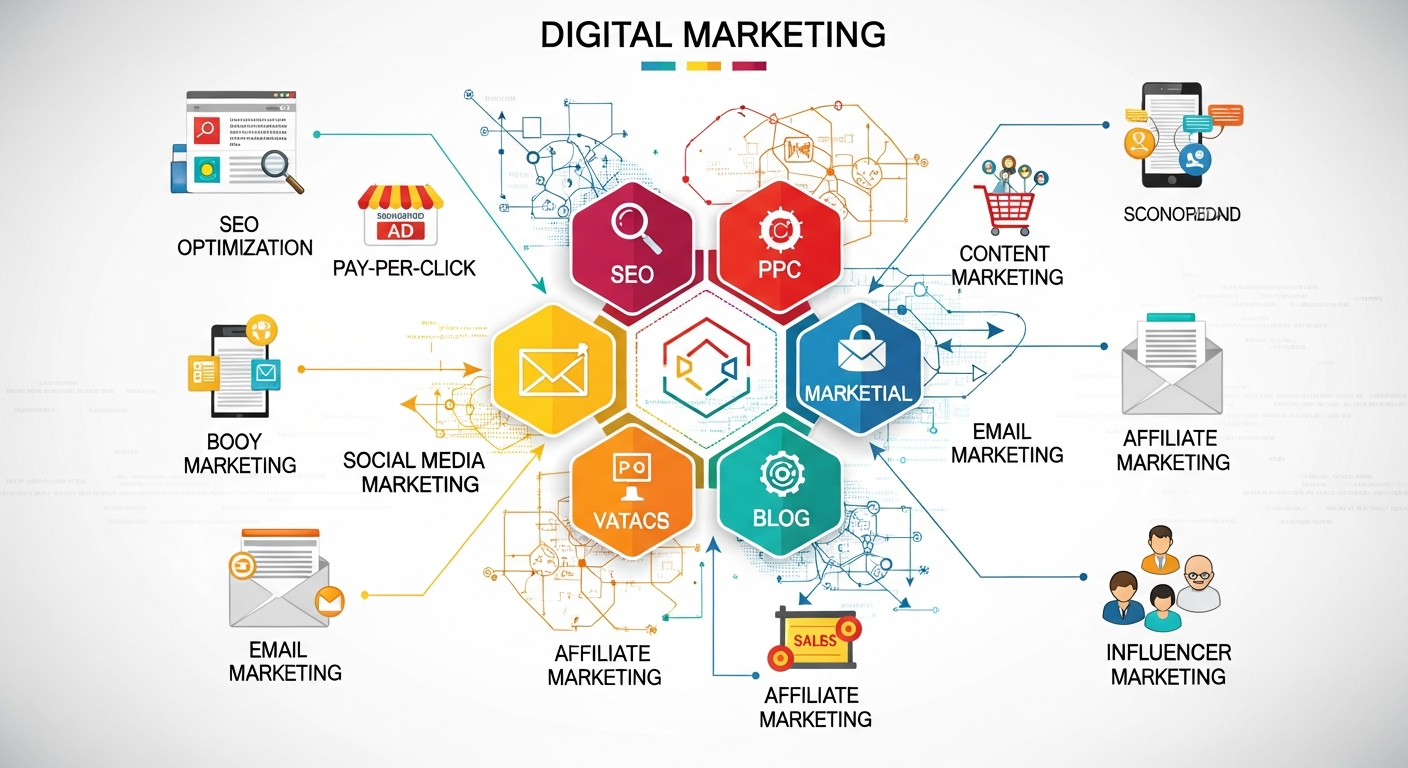
The most common types include:

  • Search Engine Optimization (SEO)
  • Social Media Marketing (SMM)
  • Content Marketing
  • Email Marketing
  • Pay-Per-Click Advertising (PPC)
  • Affiliate Marketing
  • Influencer Marketing
  • Mobile Marketing
  • Video Marketing
  • Online Reputation Management (ORM)

Each type serves a different purpose but often works best when combined into a comprehensive marketing strategy.

Search Engine Optimization (SEO)

Search Engine Optimization is the process of improving a website’s visibility in search engine results.

SEO focuses on optimizing website content, technical structure, and backlinks so that search engines can easily understand and rank the website.

Key SEO practices include keyword research, creating high-quality content, improving page speed, and building authoritative links.

A well-optimized website can attract consistent organic traffic without paying for advertisements.

Social Media Marketing (SMM)

Social Media Marketing involves promoting brands through social platforms such as Facebook, Instagram, LinkedIn, and Twitter.

Businesses use social media to share content, interact with customers, and run targeted advertising campaigns.

Social media marketing helps build brand awareness, drive website traffic, and create communities around products or services.

Consistency, engaging content, and audience interaction are essential for successful social media marketing.
Content Marketing

Content marketing focuses on creating valuable and relevant content to attract and engage audiences.

Common content formats include blog posts, articles, videos, infographics, podcasts, and guides.

The goal of content marketing is not only to promote products but also to educate and inform audiences.

High-quality content helps build trust, improve SEO performance, and position brands as industry experts.

Email Marketing

Email marketing is a direct communication channel that allows businesses to connect with customers through personalized messages.

Companies use email marketing to share updates, newsletters, product announcements, and promotional offers.

Effective email marketing strategies include segmentation, personalization, and automation.

When done properly, email marketing can help maintain long-term customer relationships and improve retention.

Pay-Per-Click Advertising (PPC)

Pay-Per-Click advertising is a model where advertisers pay each time a user clicks on their advertisement.

PPC ads typically appear on search engines, websites, and social media platforms.

Businesses use PPC campaigns to drive targeted traffic quickly and generate leads or sales.

Proper keyword selection, compelling ad copy, and optimized landing pages are important for successful PPC campaigns.

Affiliate Marketing

Affiliate marketing is a performance-based marketing strategy where businesses partner with individuals or publishers who promote their products.

Affiliates earn a commission for each sale or lead generated through their unique referral link.

This approach allows businesses to expand their reach while only paying for measurable results.

Affiliate marketing is commonly used by e-commerce brands and online services.

Influencer Marketing

Influencer marketing involves collaborating with individuals who have established audiences on social media or digital platforms.

Influencers create content that showcases products or services in an authentic way.

This type of marketing can help brands reach niche audiences and build credibility.

Successful influencer partnerships depend on transparency, audience alignment, and genuine recommendations.

Mobile Marketing

Mobile marketing focuses on reaching users through smartphones and mobile devices.

Common mobile marketing strategies include mobile-friendly websites, in-app advertising, SMS campaigns, and push notifications.

Since a large portion of internet users access content through mobile devices, optimizing campaigns for mobile experiences is essential.

Video Marketing

Video marketing uses video content to promote brands, explain products, or share valuable information.

Videos can be published on platforms like video streaming sites, social media, and websites.

Popular formats include tutorials, product demonstrations, testimonials, and educational content.

Video marketing is effective because it captures attention and communicates information quickly.

Online Reputation Management (ORM)

Online Reputation Management focuses on maintaining a positive brand image on the internet.

Businesses monitor customer feedback, online reviews, and social media mentions to understand public perception.

Responding to reviews professionally and addressing concerns helps build trust with customers.

ORM also involves creating positive content that reflects the brand’s values and reliability.

Digital Marketing Tools and Platforms

Digital marketers use various tools to manage campaigns and analyze results.

Some commonly used tools include:

  • Analytics platforms for tracking website traffic
  • Keyword research tools for SEO
  • Social media scheduling platforms
  • Email marketing software
  • Advertising management tools
  • Content management systems

These tools help marketers automate tasks, improve efficiency, and measure campaign performance.

How to Create a Digital Marketing Strategy

A successful digital marketing strategy begins with clear planning.

First, businesses must define their goals such as increasing website traffic, generating leads, or improving brand awareness.

Next, they identify their target audience and understand customer behavior.

After selecting the appropriate digital marketing channels, businesses create valuable content and campaigns tailored to their audience.

Finally, performance data should be analyzed regularly so strategies can be improved over time.

Benefits of Digital Marketing for Businesses

Digital marketing offers many advantages for businesses of all sizes.

It allows precise audience targeting and measurable campaign results.

Businesses can communicate directly with customers and receive feedback quickly.

Digital marketing also provides flexibility, enabling marketers to adjust campaigns based on performance data.

Additionally, it helps companies compete effectively in the digital marketplace.

Digital Marketing for Small Businesses

Digital marketing provides significant opportunities for small businesses.

With limited budgets, small companies can still reach large audiences through social media, search engines, and content marketing.

Local SEO helps small businesses attract nearby customers searching for services online.

Affordable digital advertising options also allow small businesses to promote their products without large marketing budgets.

Digital Marketing Trends

Digital marketing continues to evolve as technology changes.

Some emerging trends include:

  • Increased use of artificial intelligence in marketing automation
  • Greater focus on personalized user experiences
  • Growth of short-form video content
  • Voice search optimization
  • Data-driven marketing strategies

Businesses that adapt to these trends can stay competitive in the digital environment.

Common Digital Marketing Mistakes to Avoid

Many businesses face challenges when implementing digital marketing strategies.

Common mistakes include targeting the wrong audience, ignoring data analytics, and producing low-quality content.

Another mistake is relying on a single marketing channel instead of diversifying strategies.

Consistency, clear goals, and continuous learning are important for long-term success.

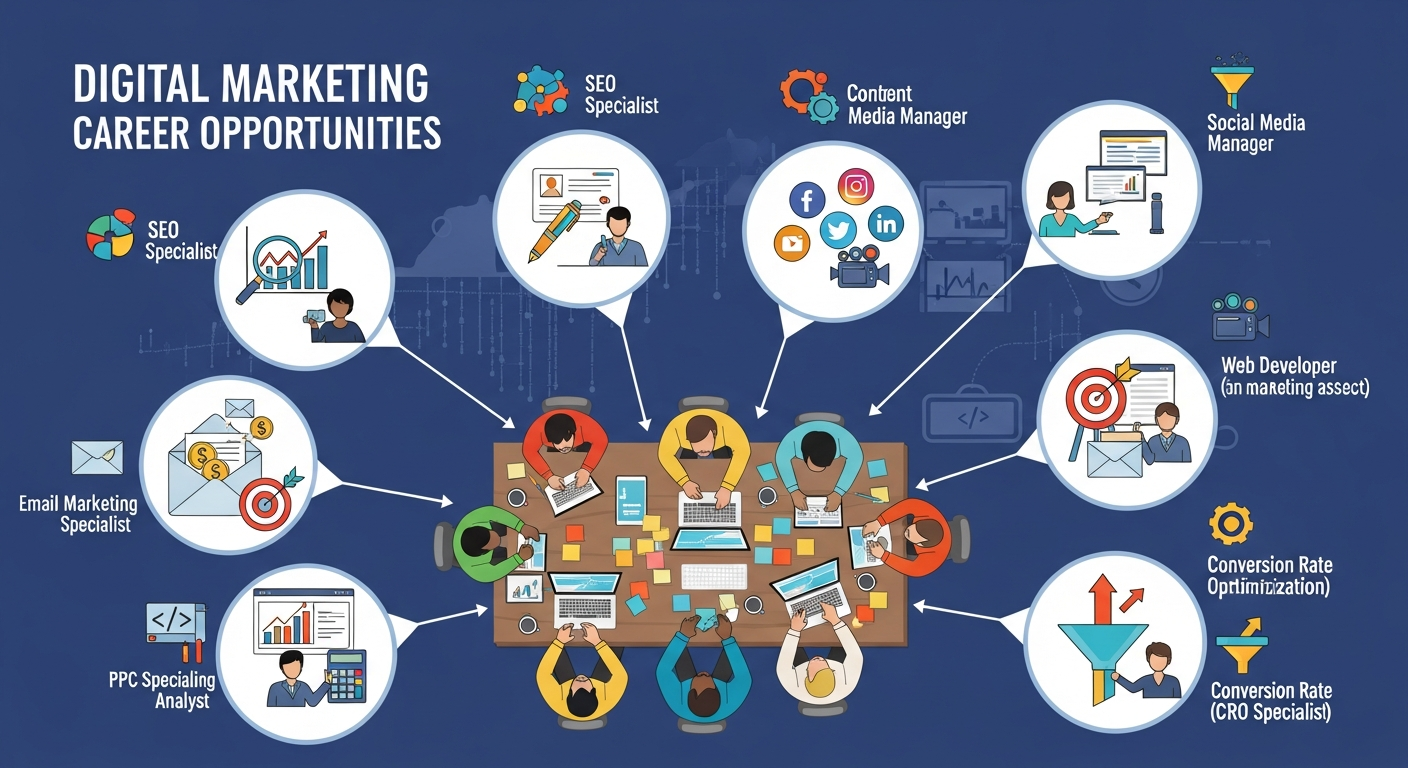
Digital Marketing Career Opportunities

Digital marketing offers many career paths.

Some popular roles include:

  • SEO Specialist
  • PPC Specialist
  • Social Media Manager
  • Content Strategist
  • Email Marketing Specialist
  • Digital Marketing Manager
  • Marketing Analyst

As businesses continue to expand their online presence, demand for skilled digital marketers is expected to grow.

How to Start a Career in Digital Marketing

Starting a career in digital marketing typically involves learning the fundamentals of online marketing.

Many professionals begin by taking digital marketing courses or certifications.

Building practical skills through internships, personal projects, or freelancing can also help gain experience.

Understanding tools like analytics platforms, advertising platforms, and content management systems is valuable for career growth.

Future of Digital Marketing

The future of digital marketing will likely be shaped by technology and changing consumer behavior.

Artificial intelligence, machine learning, and automation are expected to play a larger role in marketing strategies.

Personalized experiences and data privacy considerations will also become increasingly important.

As new platforms and technologies emerge, digital marketers will need to adapt and continue learning to stay effective.

sing up our newsletter

Sign up today for hints, tips and the latest product news - plus exclusive special offers.